Bedding Guide
What Sets Sferra Bedding Apart: Weaves, Finishes, and Fit
The character of fine bedding is decided in details that are easy to overlook at first glance: the crossing of threads, the treatment of a fabric after weaving, the depth of a fitted sheet’s corners. Sferra offers a useful point of reference for considering these choices—not as a shortcut to one supposedly perfect bed, but as a way to understand what construction can contribute to comfort, appearance, and everyday use.
A sheet is an unusually intimate piece of household design. It meets the body for hours at a time, takes the measure of a room’s temperature, and has to survive the unglamorous repetitions of laundry. Yet bedding is often assessed by a shorthand: a number on a label, a description such as “luxury,” or the attractive promise of a smooth, immaculate bed. Those clues are not useless, but they leave out the qualities that make one fabric feel crisp and another fluid, one finish look tailored and another deliberately relaxed.
To compare fine linens thoughtfully, it helps to consider three connected questions. How is the cloth woven? What has been done to it after it leaves the loom? And will the finished piece fit the mattress, pillow, or duvet it is meant to cover? Sferra’s bedding collections can be approached through those questions, while remembering that specifications vary by collection and item. A brand name alone cannot tell you whether a particular sheet will suit a warm sleeper, a deep mattress, or someone who dislikes ironing.
Begin with the weave, not the adjective
Weave describes how lengthwise and crosswise yarns interlace to form fabric. That arrangement affects the surface, drape, airflow, and the way the material responds to movement. It is one reason two sheets made from cotton can feel strikingly different, even before finishing enters the discussion. Fiber matters; so does the architecture built from it.
Percale is commonly associated with a crisp, matte hand and a relatively neat, plain surface. Its appeal is partly sensory: it can feel cool and freshly laundered, with a little more structure than a fabric that drapes close to the body. For people who prefer a clean, airy sensation, percale may be an attractive place to start. It can also wrinkle more visibly than some smoother, more fluid weaves, which is a practical consideration rather than a flaw.
Sateen is made with a different arrangement of yarns that gives the surface a smoother appearance and often a subtle sheen. It tends to feel supple, with a softer drape that many sleepers enjoy. That polished impression is not the same thing as satin, nor does it automatically mean a fabric is more durable or more comfortable. The fiber, yarn quality, construction, and care all remain part of the picture.
Neither weave wins on every measure. Percale may suit someone who wants a crisp, comparatively cool-feeling bed; sateen may appeal to someone who prefers a smoother surface and a more fluid fall. Personal preference, room conditions, sleep habits, and the rest of the bedding ensemble all matter. A description of a collection can provide clues, but the most useful comparison is between specific items made from known fibers and constructions.
Thread count, meanwhile, is only one piece of information. It refers to the number of threads counted within a given area, but counting conventions and yarn characteristics complicate simple comparisons. A high number does not by itself establish softness, breathability, longevity, or quality. It is more illuminating to read thread count alongside the fiber, the weave, the fabric’s weight when available, and the maker’s care instructions. The hand of the cloth is the result of several decisions, not a single figure.
Fiber gives the weave its character
Cotton remains a familiar bedding fiber because it can be spun and woven in many ways. Staple length—the length of the individual cotton fibers—can influence how yarn is made and how the finished cloth performs, though it should not be treated as a complete quality verdict. A useful product description identifies fiber content clearly and allows the shopper to consider that information alongside construction and finishing.
Linen offers a different set of sensations. Made from flax, it often has a visible texture and a relaxed drape, and it is valued for its breathability and ability to manage moisture. It may feel more textured than finely finished cotton when new, then become gentler with repeated use and washing. Its natural irregularities are part of its character; a perfectly smooth, pressed appearance is not always the point.
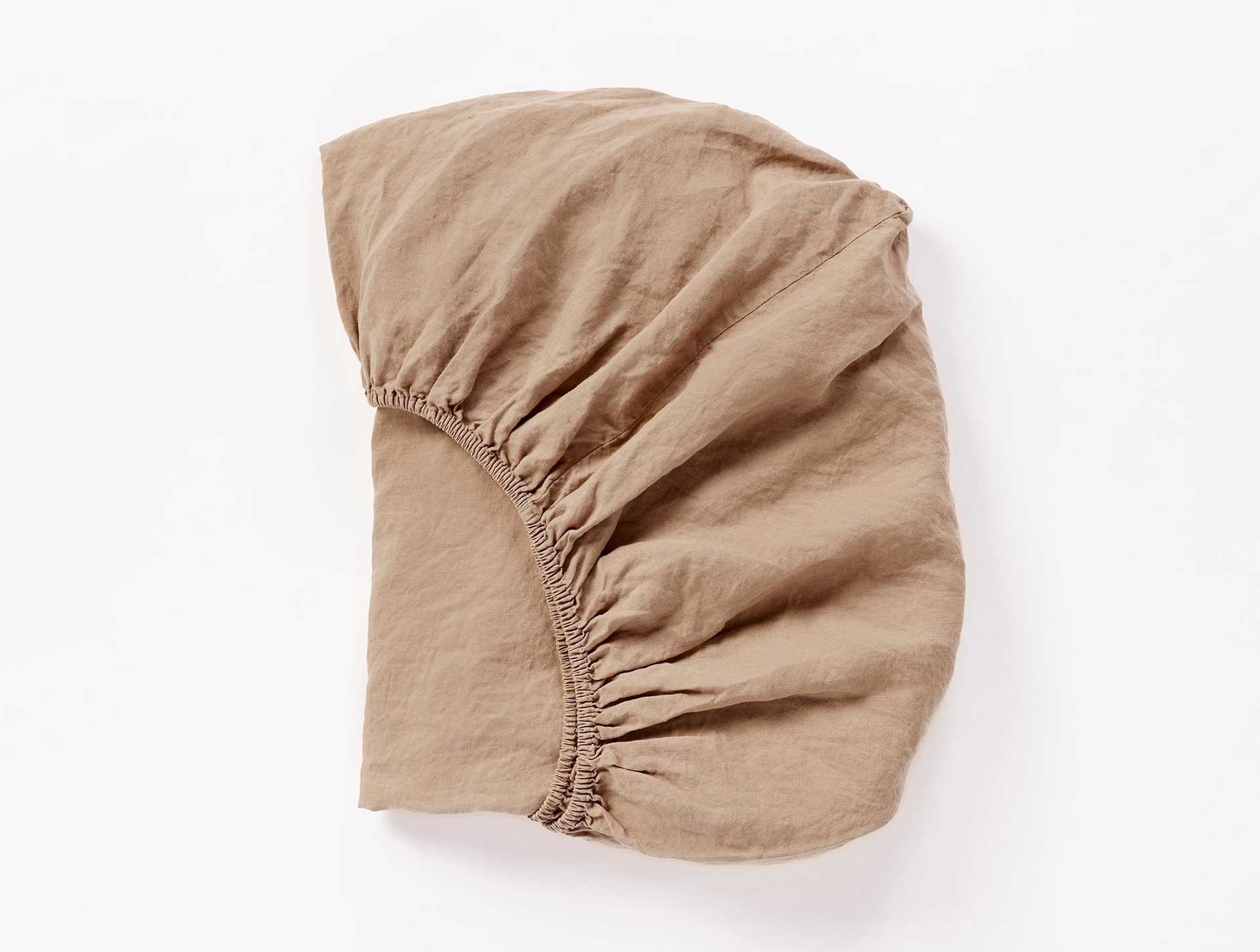
For a concrete example of how construction and finish are described outside the Sferra collections, the Organic Relaxed Linen Sheet Set is made from organic flax grown in France and woven in Portugal. Its listed details include a 15-inch-deep fitted sheet, full elastic, pick-stitched cuffs, and GOTS certification. Those specifications do not make it a stand-in for a different brand or fabric. They do illustrate the value of looking beyond a product name to the fiber’s origin, the construction, the fit, and the care routine.
Comparisons are clearest when like is set beside like. A linen sheet and a cotton percale sheet may both be breathable, but they do not offer the same surface or drape. A smooth cotton sateen and a crisp cotton percale share a fiber while presenting it differently. The question is not simply which fabric is “best,” but which set of qualities feels right in the conditions in which it will be used.
Finishing is where the cloth gets its manner
After weaving, fabric may be washed, softened, dyed, or otherwise finished. These processes can alter the hand, surface, color, and behavior of the cloth. A crisp, matte finish can make a sheet feel clean-lined and cool to the touch; a washed finish may give it a softer, more lived-in character before its first night on the bed. Finishing details also shape the way a fabric looks after laundering and how much attention it seems to demand.
Stone-washing, garment-washing, and similar descriptions should be read as clues, not as universal promises. The precise result depends on the fabric and the process. One washed linen may feel airy and rumpled; another may be smoother and more substantial. A product description that says “soft” is less informative than one that also identifies the fiber, weave, and care guidance.
Details at the edges deserve attention, too. Hemstitching, piping, embroidery, and pick stitching can lend definition without changing the fundamental behavior of the fabric. A restrained hem may make a sheet feel quietly finished; a more decorative border can turn a pillowcase or flat sheet into a visible design element. The distinction is aesthetic, but also practical: trim and embellishment may require a little more care, and the edge can affect how a piece layers with other bedding.
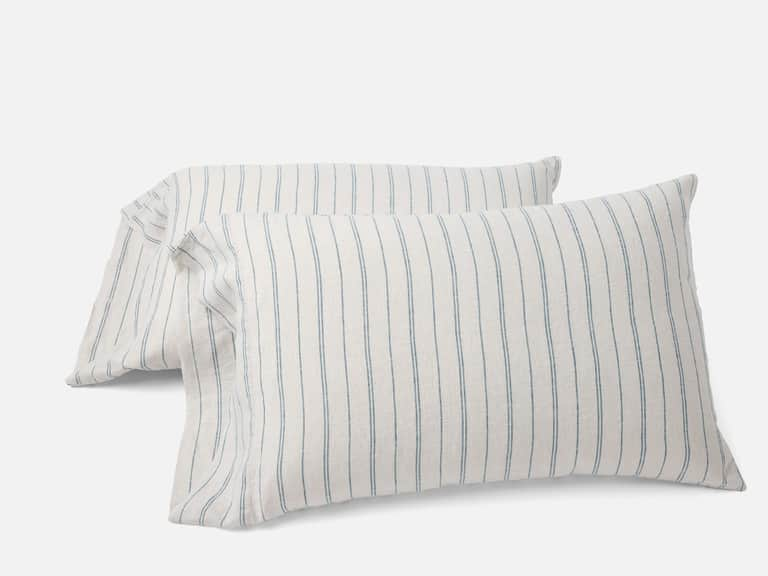
Color is another part of finishing. Piece-dyed cloth is dyed after it has been formed, while yarn-dyed fabric uses colored yarns in the woven design. These approaches can create different visual effects, particularly in stripes and patterns. When coordinating pieces, check that color names and product descriptions refer to the same collection and finish; a shade called “white” or “natural” can vary across materials and production runs.
Fit is not a minor specification
A beautiful fitted sheet that will not stay on the bed is an expensive exercise in frustration. Mattress size is only the starting point. Measure the mattress’s length and width, then its depth, including any topper or protector that will remain underneath the sheet. Compare that total with the sheet’s pocket depth, and leave room for the mattress to be fully covered rather than stretched taut at the corners.
A 15-inch pocket, for instance, describes a useful dimension, not a guarantee that the sheet will suit every bed of that depth. Mattress shape, elastic placement, fabric give, and the thickness of additional layers can all affect the fit. Full elastic around the edge can help keep a sheet in place; elastic limited to the corners may behave differently. If a collection offers several fitted-sheet sizes, check the measurements for the individual size rather than assuming every version is identical.
Flat sheets call for a different calculation. Their width and length determine how much fabric can be tucked and how generously the sheet falls at the sides. For a bed with a thick mattress, a flat sheet with modest dimensions may not provide the coverage a shopper expects. Specifications should be checked against the mattress and personal habits—whether the sheet is tucked firmly, folded over the duvet, or left to drape.
Pillowcases are similarly easy to misjudge. Standard, queen, and king labels are convenient, but dimensions are more reliable, especially when pillows are unusually full or have distinctive shapes. A close-fitting case can make a pillow feel firmer; a more generous one may wrinkle or shift. Look for the actual measurements and note whether a set includes one or two cases. Contents can vary by size and by collection.
Duvet covers must be considered both as textile and as a practical enclosure. Confirm the cover’s dimensions against the insert and look for information about internal ties or other means of keeping the insert in position. A cover that is too small can compress the filling; one that is too large may allow it to migrate. Closures, ties, and corner details are modest pieces of engineering, but they often determine whether the bed stays orderly overnight.
A coordinated bed need not be a matching set
Coordination is sometimes mistaken for uniformity. A bed can feel coherent without every surface sharing the same weave, shade, and finish. A crisp sheet, a more textured duvet cover, and a restrained border on the pillowcases can create a considered arrangement, provided the colors and materials make sense together. The best combinations give the eye some variation and the body some choice.
Start with the layer that has the greatest effect on sleep: the sheet. Once its texture and temperature suit you, build outward. A duvet cover can echo its color while introducing another material or a quieter variation in tone. Shams and decorative covers can add structure, but they should not crowd the bed or make routine care unnecessarily complicated. A throw may contribute warmth and texture without becoming part of the nightly laundering rotation.
It is helpful to keep a practical inventory of what each piece is intended to do. The fitted sheet protects the mattress and needs a secure fit. The flat sheet provides an additional layer and may reduce how often the duvet cover is washed. Pillowcases meet the face and hair directly, making their texture particularly noticeable. A duvet cover protects an insert and makes the bed’s largest expanse of color. Considering each role prevents the common mistake of buying attractive pieces that do not work together in use.
Care is part of the purchase
Even an excellent textile can disappoint if its care routine conflicts with the household’s habits. Before choosing, read the label and ask whether the recommended washing temperature, drying method, and ironing instructions are realistic. Some linen is designed to be tumble dried on low and left with a relaxed finish; some cotton percale is often removed while still slightly damp if a smoother appearance is desired. Instructions vary, so the product’s own guidance should take priority over general rules.
For many bedding fabrics, a gentle wash, modest detergent, and avoidance of bleach or fabric softener can help preserve the cloth. But recommendations differ by fiber, dye, and finish. Overloading a washing machine can prevent linens from rinsing and moving freely; excessive heat can stress fibers or encourage shrinkage. Drying thoroughly but not excessively is a sensible balance. The point is not to turn laundry into a ceremony, but to avoid treating a carefully made textile as indestructible.
There is also the question of wrinkles. Linen commonly acquires them; percale can crease; sateen may present a smoother face but still benefits from suitable handling. Ironing is a personal preference, not a measure of quality. If a crisp, pressed bed is important, choose fabrics and finishes that suit that routine. If the ease of a softer, rumpled surface is more appealing, select accordingly. The most successful bedding is not the set that looks untouched in a catalogue; it is the set that remains pleasant after ordinary use.
A more useful way to compare Sferra bedding
When considering Sferra, treat each collection as its own textile proposition rather than assuming a single brand-wide feel. Read the specifications for the exact sheet, pillowcase, or duvet cover under consideration. Identify the fiber and weave first, then note the finish, weight if provided, origin, dimensions, and care instructions. Ask what the design is meant to feel like: crisp, smooth, textured, substantial, or relaxed.
- For a cooler, crisper sensation: investigate percale and compare its weight and finishing with your preferences.
- For a smoother drape: look at sateen or other constructions described as soft and fluid, while checking how much sheen you prefer.
- For a more textured, relaxed bed: consider linen, noting its natural variation and the way its hand may change with use.
- For a tailored appearance: compare hems, piping, embroidery, and other edge details, as well as how they coordinate with adjoining pieces.
- For dependable daily use: confirm dimensions, pocket depth, elastic construction, set contents, and maintenance requirements before purchasing.
These comparisons are more useful than treating price, thread count, or the word “luxury” as a complete explanation. Fine bedding earns its place through a combination of material, construction, finish, and fit. A beautifully woven sheet that slips off the mattress is not well suited to its task; a practical sheet that feels wrong against the skin is not a satisfying choice either. The craft is in the balance.
The quiet intelligence of a well-made bed
Good bedding rarely announces itself. It settles into the room, behaves as expected, and becomes more familiar with use. Its quality may be visible in a straight hem or a carefully placed stitch, but it is also present in less showy matters: air passing through a fabric, a fitted corner holding its place, a finish that remains agreeable after washing.
Sferra bedding can be evaluated with the same patient attention given to any fine textile. Look past the name to the weave. Read the finish as a description of character, not a guarantee. Measure the mattress rather than trusting a category label. Consider how the pieces will be washed and how they will live together on the bed. In the end, the right choice is not necessarily the most elaborate one. It is the bedding whose construction, touch, and fit make sense in the ordinary, private hours for which it was made.