Bedding · A practical guide
Naturepedic Sheets: How Fiber and Weave Shape Sleep Comfort
A sheet is a small climate, a surface in near-constant conversation with the sleeper beneath it. Its fiber, weight, weave, and finish determine more than whether it feels crisp or soft in the shop. They influence how it breathes, how it drapes, how it changes after washing, and whether it suits the particular weather of a bedroom—and the particular habits of the person in it.
There is a familiar temptation in buying sheets to look for a single number that will settle the question. Thread count offers itself readily: precise, portable, easy to compare. But cloth is not a test score, and sleep comfort is not a contest in arithmetic. The feel of a sheet emerges from several decisions made before it reaches the bed: which fiber was spun, how the yarn was constructed, how tightly the fabric was woven, how heavy it is, and what was done to it afterward.
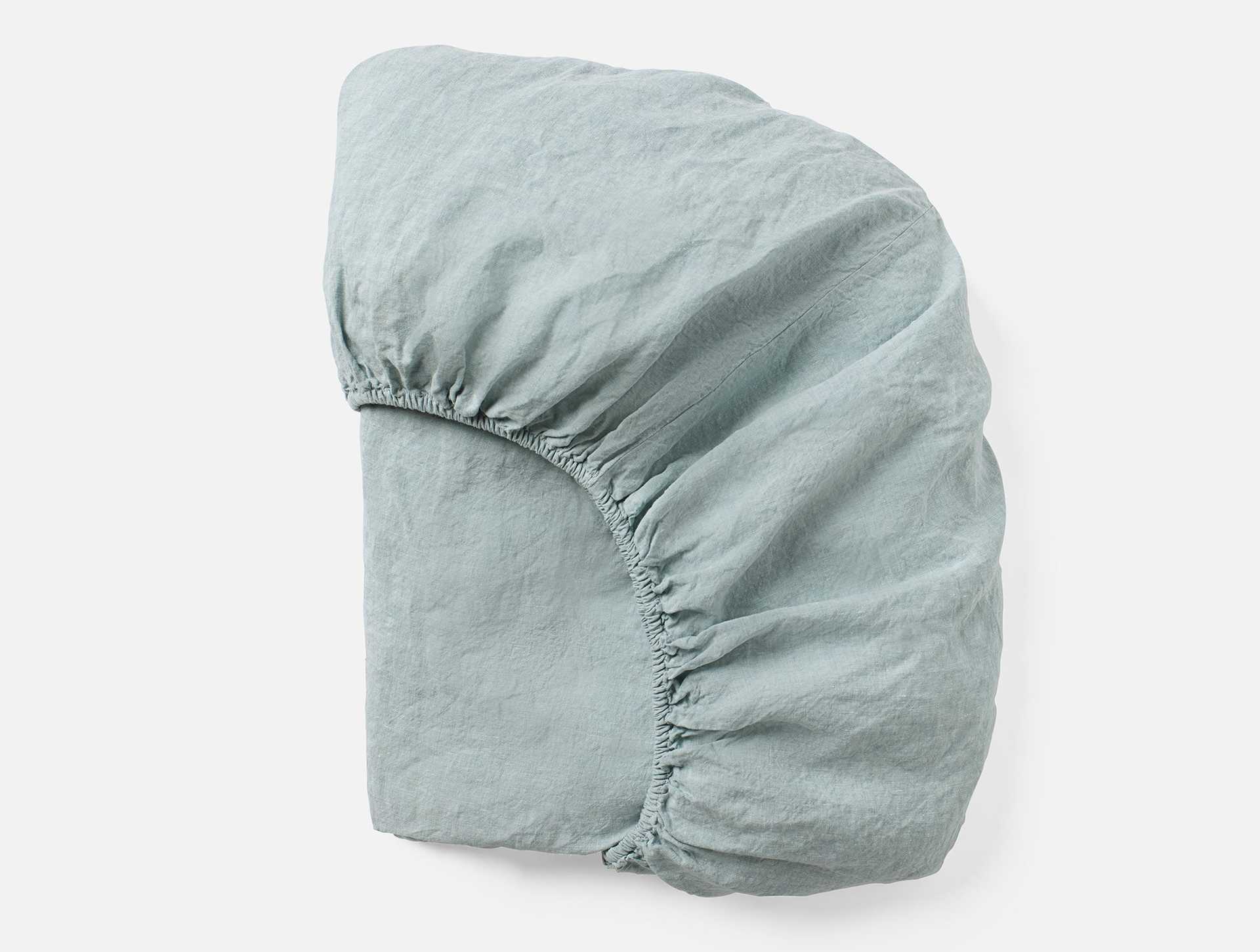
Naturepedic’s organic linen sheets make a useful case study in reading those details. The product information describes linen made from certified organic flax grown in France, woven in a GOTS-certified organic facility in India, and finished with a stone wash. The fabric is listed at 185 grams per square metre. Those details are more revealing than a lone thread-count figure would be: they describe material, weight, sourcing, and finish, each of which helps explain the character of the finished cloth.
This is not a promise that any one sheet will feel perfect to everyone. People differ in temperature, touch preferences, mattress setups, and tolerance for linen’s characteristic texture. But understanding the construction makes it easier to choose deliberately. It also helps distinguish what a product description actually tells you from what a few attractive adjectives might imply.
Start with the fiber, not the slogan
Linen begins with flax. The stalk yields fibers that can be spun into yarn and woven into cloth. In everyday bedding, the word “linen” usually signals a fabric with a recognizable combination of texture, drape, and airflow. It may feel more visibly irregular than a smooth cotton sheet; its surface can be slightly nubbly, its creases part of its ordinary appearance. That is not a defect hidden beneath a marketing story. It is one of the material’s distinguishing features.
Fiber quality and processing still matter. The length and preparation of fibers influence yarn formation, while the yarn itself contributes to strength and surface character. A label that identifies flax as the raw material tells you something important, but not everything about the finished sheet. For a more complete picture, look for the fiber percentage, stated origin, fabric weight, finishing details, and care instructions together.
In the Naturepedic listing, the sheets are described as GOTS-certified organic flax or linen, with flax grown in France. GOTS—the Global Organic Textile Standard—is a certification framework for organic textile processing and production. A certification can help readers assess claims against a defined standard; it should not be confused with a guarantee of a particular hand-feel, a particular level of softness, or a specific sleep outcome. Those depend on the fabric’s construction and on personal preference as well as the fiber’s credentials.
Fiber choice is also a question of sensory expectation. Someone who wants a very smooth, sleek surface may gravitate toward a different fabric than someone who enjoys a relaxed, textured one. Linen tends to have a more open, natural-looking presence than highly polished bedding. It can soften through laundering and use, while retaining the visual character that makes it recognizably linen. If “soft” means silk-like smoothness to you, that distinction is worth considering before purchase.
What fabric weight can—and cannot—tell you
Fabric weight is commonly expressed in grams per square metre, or gsm. It measures the mass of a given area of cloth. Naturepedic lists its organic linen sheets at 185 gsm, a useful point of comparison when assessing other products whose weights are also published. Weight can help set expectations: all else being equal, a heavier fabric may feel more substantial, while a lighter one can have a more delicate drape. But “all else being equal” is doing a great deal of work in that sentence.
Two fabrics with the same gsm may feel quite different because they use different yarns, weaves, or finishes. A sheet’s apparent heft is not a direct measurement of warmth, softness, quality, or durability. Nor does a heavier fabric automatically make a better bed. Weight describes one aspect of the textile; the bedroom’s temperature, the sleeper’s preference, and the rest of the bedding ensemble determine whether that aspect is welcome.
Think of weight as a helpful clue rather than a verdict. If you like sheets that feel present and substantial against the body, a midweight linen may appeal. If you prefer barely-there bedding or live in a very warm room, you may want to compare weights across products and consider the weave and fiber at the same time. Product pages that omit weight leave a gap in the information, though touch and finish will still resist being reduced to a number.
Naturepedic’s 185 gsm figure offers a concrete starting place for comparison. It does not establish how the sheet will feel after six months of washing, nor does it tell you whether the cloth will feel cool to your particular skin. Those questions are better approached by combining the stated weight with construction details, care guidance, and an honest account of what you like in bedding.
Weave is the architecture you sleep on
Yarn becomes fabric through weaving: the crossing of lengthwise and crosswise threads. The pattern of those intersections affects a textile’s surface, flexibility, durability, and movement of air. A weave can give fabric a crisp or flowing character, a smooth or textured face, a tighter or more open structure. These differences are often more consequential to the sleeper than the numbers printed in a headline.
In a sheet, weave also influences drape: the way the cloth falls over the body and bed. Some fabrics feel taut and orderly; others settle into folds. Linen’s familiar relaxed appearance is shaped by both fiber and construction, and its natural creasing is part of that character. A neatly made bed in linen may look less pressed than one dressed in a crisp cotton percale. For some people, that easy, lived-in quality is the point. For others, it may seem too informal.
Descriptions of the Naturepedic sheets emphasize linen’s breathable, temperature-regulating feel and its ability to manage moisture. These are practical qualities to consider, especially for sleepers who dislike a clammy surface or want bedding that feels comfortable across changing seasons. Yet no weave can control the temperature of a room, compensate for a heavy comforter, or make every sleeper experience a fabric in the same way. The most useful claims are those read as characteristics of the material, not as guarantees of a particular night’s rest.
When a listing does not name a particular weave, it is sensible not to infer one. Instead, use the information available: fiber, gsm, finish, and the product’s stated feel. If weave terminology matters to your decision, look for an explicit construction description or ask the seller. A confident guess is still a guess, and sheet shopping is a poor place to mistake jargon for evidence.
Finish changes the first impression
A newly manufactured textile rarely arrives at its final hand-feel by accident. Finishing processes can alter how the fabric looks and feels, and can influence its readiness for everyday use. Naturepedic describes its linen sheets as stone-washed. In broad terms, stone washing is a finishing process associated with a softer, more relaxed appearance than an untouched, crisp textile may have. The product listing also describes the fabric as becoming softer with washing.
That first impression matters, but it is not the whole lifespan of the sheet. A finish can make cloth feel more inviting straight from the package, while repeated laundering continues to alter its hand and drape. Linen’s appeal often includes that gradual settling-in: a fabric that acquires a softer familiarity through use rather than trying to appear perfectly polished from the beginning.
Finishes should be considered alongside care instructions. For these sheets, the listed guidance is machine washing in warm water, tumble drying on low, warm ironing if desired, and avoiding bleach. A buyer who prefers cold washing or line drying should check the product’s official care directions and make sure they suit household routines. Following the manufacturer’s guidance is generally the most reliable way to preserve fabric and construction; ironing is optional when the desired look is relaxed.
Care is part of comfort because it affects how likely a sheet is to be used and maintained. A fabric that feels wonderful but demands an impractical routine can become an expensive source of mild household resentment. A washable sheet with straightforward instructions may fit more easily into ordinary life. Before buying, consider not only the feeling you want on the first night but also the laundry habits you can sustain.
Fit: the unglamorous detail that matters nightly
A fitted sheet can be wonderfully breathable and still become a nuisance if it slips off a corner at two in the morning. Fit deserves the same attention as fiber. Naturepedic lists a 15-inch pocket on its fitted sheets. That measurement is intended to help shoppers assess mattress depth, but the mattress itself is not always the whole calculation: mattress toppers and protectors add height, and some mattresses have unusual profiles.
Measure the full depth of the dressed mattress, including any topper or protector that will remain underneath the sheet. Then compare that measurement with the pocket depth and the product’s fit guidance. A pocket that is technically deep enough may still feel tight if the mattress has bulky corners or if the sheet is cut close. Conversely, a very deep pocket on a shallow mattress can leave excess fabric that is harder to manage.
The Naturepedic set is described as including a flat sheet, a fitted sheet, and two pillowcases, with listed sizes of Queen, King, and California King. Pillowcase dimensions vary by size. Confirming the set contents and the precise size before ordering prevents the familiar disappointment of discovering that “sheet set” meant something slightly different from what you assumed. Bedding terminology is simple until it is not.
Construction details matter here, too. Elastic coverage and corner design can influence how securely a fitted sheet stays in place, although the available Naturepedic description specifies the pocket depth rather than detailing every element of the elastic construction. When a feature is not stated, it is better to check the current product information than to assume. The right size is not a flourish; it is what lets the fabric do its work without constant adjustment.
Why thread count is an incomplete guide
Thread count reports the number of threads in a square inch of fabric, according to the method used to count them. It can be relevant when comparing products made with similar fibers and constructions. It becomes less helpful when treated as a universal ranking. A linen sheet and a cotton sheet are different textiles; a thread-count comparison across them does not automatically explain which will feel softer, breathe better, or last longer.
Thread count also says little on its own about fiber origin, yarn quality, weave, fabric weight, or finish. A high figure cannot turn an unsuitable texture into a suitable one. For linen in particular, a shopper may find more useful information in the fiber composition, weight, stated sourcing, certification, fit, and washing instructions than in a count that is not central to how the fabric is described.
This is not an argument against numbers. Numbers are valuable when they answer the right question. Pocket depth helps assess mattress fit. Weight offers a point of comparison. Dimensions tell you whether a flat sheet will provide the coverage you expect. Certification identifies an external standard. The trick is to resist asking one metric to tell the whole story.
A more complete buying decision reads the label as a small dossier. What is the fiber? Where is it grown or made, if disclosed? What is the weight? How is the fabric finished? What does the set include? How should it be washed? Which claims are certified, and which are descriptions of intended performance? The answers will not remove uncertainty, but they can make it more manageable.
A practical way to choose
Begin with the feeling you want, expressed in ordinary language rather than product vocabulary. Do you like crisp sheets, or a soft and relaxed surface? Do you want a fabric with visible texture, or one that feels smooth and even? Do you tend to overheat, or prefer a weightier layer? These preferences are personal and more useful than an abstract ranking of “best” materials.
Then check the specifics. For Naturepedic’s organic linen sheets, the published details include certified organic flax, French-grown fiber, a listed weight of 185 gsm, a stone-washed finish, a 15-inch fitted-sheet pocket, and warm-machine-wash care guidance. The set’s described contents and available sizes provide further practical context. Taken together, these points offer a clearer portrait than a broad claim about luxury could.
If you are comparing sheets, use the same checklist for each product:
- Fiber: Is the fabric linen, cotton, silk, or a blend? Is the stated composition clear?
- Weight: Is gsm or another comparable measure provided?
- Construction: Is the weave or fabric structure named, or left unspecified?
- Finish: Is the fabric stone-washed, garment-dyed, brushed, or otherwise treated?
- Fit: Does the pocket depth suit the full height of your mattress and any layers?
- Care: Do the washing and drying instructions fit your routine?
- Certification: Are claims linked to a named standard rather than left as general language?
- Set contents: Are the flat sheet, fitted sheet, and pillowcases included in the sizes you need?
Finally, give some attention to the rest of the bed. A sheet does not perform alone. A thick mattress protector can change the feel beneath it; a dense duvet can influence warmth; a room with poor airflow can make even breathable bedding feel oppressive. It is tempting to attribute every overnight discomfort to the sheet, but sleep comfort is a system. Changing one layer at a time makes it easier to understand what is helping.
A sheet is a habit, not just a purchase
The appeal of a well-made linen sheet is not always dramatic. It may be the small relief of a surface that does not feel clammy, the ease of making a bed without insisting on perfect smoothness, or the way fabric becomes familiar through repeated washing. These pleasures are quiet. They also depend on choosing a textile whose qualities suit the person living with it, rather than an idealized version of the bedroom.
Naturepedic’s product details make that choice legible. Organic flax and linen identify the material; the listed gsm gives a sense of weight; the stone-washed finish helps explain the relaxed presentation; the pocket depth and care directions speak to daily use. None of these facts can predict exactly how the sheets will feel to every sleeper. Together, however, they offer a grounded way to think about comfort before the fabric is on the bed.
For readers drawn to breathable, textured bedding, the Naturepedic Organic Linen Sheets are a clear example to assess by their stated specifications. Consider the fiber and certification, check the dimensions against your mattress, and decide whether linen’s natural texture and relaxed finish are qualities you actually enjoy. The right sheet is not the one with the most persuasive number. It is the one whose material, construction, and care fit the particular life unfolding beneath it.